Ready-to-Live Community vs Newly Launched Project: Which Property in Raipur Should You Choose?
Buying a property is a major financial decision, and choosing the right project can make a significant difference to your future living experience. While some buyers prefer newly launched projects because they offer the excitement of a fresh development, others look for established communities where infrastructure, amenities and the surrounding environment are already visible.
Both options have their advantages. However, the right choice depends on your budget, lifestyle expectations, construction plans and how soon you want to use the property.
For anyone planning to purchase a home or plot, understanding the difference between a ready-to-live community and a newly launched project is an important first step. Instead of relying only on brochures, attractive offers or future promises, buyers should evaluate what is available today and what they may need to wait for.
Let's explore the key differences between these two options and understand which one could be the right fit for your family.
What Is a Ready-to-Live Community?
A ready-to-live community is a residential development where essential infrastructure and common facilities have already been developed, and residents may already be living there. Depending on the project, this can include internal roads, landscaped spaces, security arrangements, recreational amenities and other shared facilities.
The biggest advantage is visibility. Buyers can visit the site, inspect the surroundings and get a better understanding of the living environment before making a decision.
For example, instead of imagining what the neighbourhood might look like after several years, you can observe the existing surroundings, see the infrastructure in place and understand how the community has been planned.
However, buyers should still check which facilities are operational, which are shared, what maintenance arrangements apply and whether the particular plot or home is available for immediate use. A developed community does not automatically mean every property is ready for occupation.
What Is a Newly Launched Residential Project?
A newly launched residential project is a development that has recently been introduced to the market. Depending on its stage, it may offer undeveloped plots, properties under construction or homes that are yet to be completed.
Such projects can appeal to buyers who have a longer planning horizon or prefer to enter a development during its early stages.
In some cases, early buyers may have access to a wider choice of plots, units or locations within the project. Developers may also introduce launch-stage pricing or payment plans, although these benefits vary from project to project.
The important consideration is that buyers may need to wait for infrastructure, common amenities or surrounding development to be completed. Actual timelines, construction progress and the developer's commitments should be verified before booking.
A newly launched project is not necessarily a poor investment, just as an established community is not automatically the better option. The decision should be based on the project's actual condition, documentation, pricing and suitability for your needs.
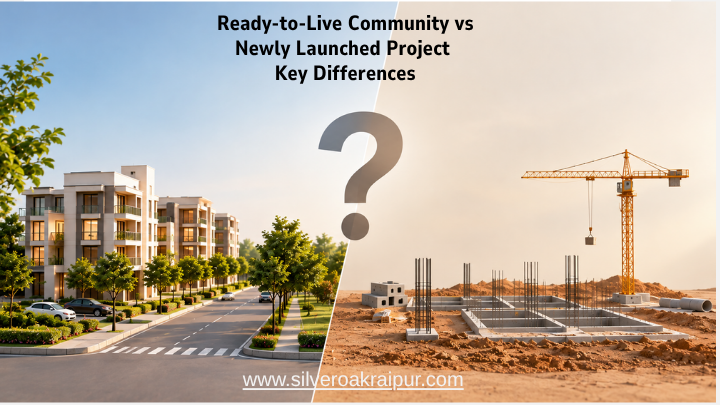
Ready-to-Live Community vs Newly Launched Project: Key Differences
1. What You See Is What You Can Evaluate
One of the biggest differences between the two options is the amount of information available before purchase.
In an established community, buyers can inspect completed infrastructure, existing roads, landscaped areas and available amenities. They can also assess the general surroundings and speak with residents, where appropriate, to understand their experience.
In a newly launched project, some elements may be represented through architectural plans, sample homes, digital renders or proposed layouts. These can help buyers understand the vision, but they should also examine the approved plans, development commitments and actual progress.
For buyers who prefer making decisions based on visible evidence, an established development may provide greater clarity.
2. Infrastructure and Amenities
Infrastructure directly affects the experience of living in a residential community. Roads, drainage, water supply, electricity, security arrangements and common spaces are not merely additional features. They influence how convenient and comfortable daily life can be.
An established community may allow buyers to inspect these facilities before committing. They can check the condition of internal roads, observe the available amenities and ask which facilities are operational.
In a newly launched project, some infrastructure may still be under development. Buyers should carefully review the proposed completion schedule and understand what is included in the purchase.
A useful approach is to create a checklist of essential facilities and compare the actual status of each item across the shortlisted projects.
3. Understanding the Neighbourhood
The surrounding neighbourhood matters just as much as the property itself.
Before purchasing, buyers should consider access to schools, healthcare facilities, grocery stores, public transport, workplaces and major roads. They should also assess traffic, noise levels, nearby development and the convenience of everyday travel.
An established community provides a more realistic picture of its current surroundings. Buyers can visit at different times of the day and evaluate the environment themselves.
A newly launched project may be located in an area expected to develop further. That possibility can be attractive, but future growth should not be treated as guaranteed. Proposed infrastructure projects, road connectivity and public facilities should be verified through reliable sources.
Ultimately, the right location is one that suits your current needs while remaining practical for your future plans.
4. Moving In or Building Your Home
Your intended use of the property should influence your decision.
If you want a completed home, you should focus on properties that are genuinely ready for occupation, with the required approvals and completion documentation. An established community may offer suitable options, but the availability and readiness of each unit must be confirmed.
If you want to purchase a plot and build a customised home, you may have more flexibility regarding the design, layout and construction schedule. However, you should check the applicable building rules, development conditions, utility availability and any construction-related restrictions.
Buyers planning to build several years later should also consider whether the existing infrastructure will support their plans and what ongoing charges may apply.
The key is to distinguish between buying into a developed community and buying a property that is itself ready for immediate use. These are related but different considerations.
5. Pricing and the Total Cost of Ownership
Price is naturally one of the first things buyers compare. However, the initial purchase price does not always reflect the total cost of owning a property.
A newly launched project may appear attractive because of an introductory price or a flexible payment schedule. Yet buyers should account for any additional development charges, applicable taxes, registration expenses, construction costs and future maintenance obligations.
An established development may have a different pricing structure because some infrastructure and amenities are already in place. However, buyers should not assume that a higher price automatically means better value.
Ask both developers for a detailed cost breakdown. Compare similar plot sizes or property types, payment terms, inclusions, maintenance charges and the likely expenses required before the property can be used.
This makes the comparison more meaningful than simply choosing the lowest advertised price.
6. Legal Documents and Approvals
Legal verification is essential regardless of whether you choose a newly launched project or an established community.
Before making a payment, verify the title and ownership records, applicable development approvals, land-use permissions, approved layout and relevant registration requirements. Where applicable, check the project's registration and details through the official Chhattisgarh Real Estate Regulatory Authority.
For a completed home, review the applicable completion and occupancy documents. For a plot, confirm its boundaries, permitted use, access rights and the conditions governing future construction.
Do not rely solely on verbal assurances or marketing material. Ask for the relevant documents and consider having them reviewed by an independent property lawyer.
An established community may make physical inspection easier, but it does not remove the need for legal due diligence. Similarly, a newly launched project should not be dismissed without examining its actual documentation and development status.
Which Option Is Better for Property Buyers in Raipur?
The answer depends on what you value most.
If you prefer seeing the existing infrastructure, assessing the surroundings and understanding the available lifestyle before buying, a ready-to-live community may be a suitable option.
If your priority is securing a particular plot early, exploring a longer-term development opportunity or choosing from the initial inventory, a newly launched project may be worth considering.
Buyers should also account for their expected holding period. Someone planning to build a home within the next year may have different priorities from someone purchasing land for a longer-term family plan.
For those researching property in Raipur, the decision should not be based on launch offers or claims about future appreciation alone. Compare the actual development status, total cost, legal documentation, location, amenities and suitability for your intended use.
There is no universal winner. The better choice is the one that offers the right combination of verified facts, practical convenience and long-term suitability for your family.
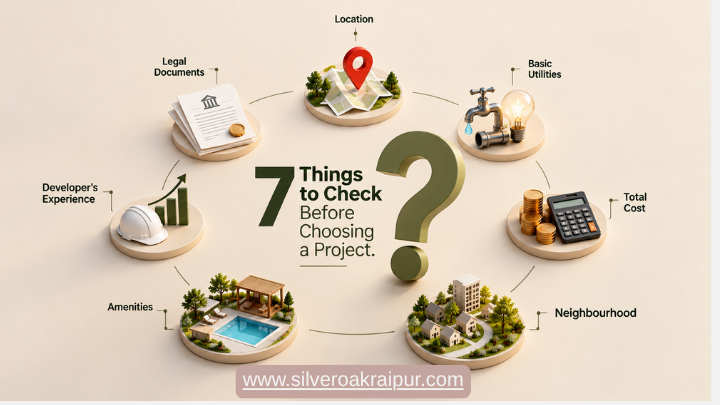
A Practical Checklist Before Booking a Property
Before making your final decision, visit the site and use the following checklist to compare projects objectively.
Development status: Identify which roads, utilities and amenities are completed and operational.
Location: Check access to schools, hospitals, markets, workplaces and major roads.
Property details: Confirm the plot size, boundaries, layout, orientation and permitted use.
Legal verification: Review ownership, approvals, registration details and applicable documents.
Total cost: Include the purchase price, taxes, registration, development charges and maintenance expenses.
Construction plans: If purchasing a plot, understand the applicable building rules and utility connections.
Community environment: Observe the surroundings, common spaces, security arrangements and existing residential activity.
Developer track record: Research completed projects, documented delivery history and customer feedback.
Written commitments: Obtain payment terms, specifications, timelines and applicable obligations in writing.
Taking the time to verify these details can help you avoid decisions based only on attractive presentations or temporary offers.
Questions to Ask Before Choosing a Residential Project
During a site visit, ask the developer which facilities are currently available and which are still planned. Request a written breakdown of the purchase price and any additional charges. Find out whether the property is ready for immediate use or requires further development.
You should also ask about maintenance responsibilities, access to common amenities, construction permissions and the documentation required for registration.
If the community is already occupied, observe the existing environment and ask relevant questions about the facilities and day-to-day experience. If the project is newly launched, request the approved development plan and the committed timelines for outstanding work.
Clear answers to these questions can help you compare projects fairly and make a decision with greater confidence.
Conclusion: Explore an Established Community at Silver Oak Raipur
Choosing between a ready-to-live community and a newly launched project ultimately comes down to how much visibility, convenience and flexibility you need before making a purchase. While a new development may appeal to buyers with longer timelines, an established community allows you to evaluate its existing infrastructure, amenities and surroundings before deciding.
Silver Oak Raipur offers residential plots and 3 BHK bungalows within a developed, gated community in Dhansuli, near Vidhan Sabha Road. Its project features include internal roads, landscaped gardens, recreational facilities, sports amenities and community spaces. Buyers can explore the available options in person, assess the existing development and ask the sales team about pricing, documentation, availability and applicable purchase terms.
If you are comparing residential developments in Raipur, consider visiting Silver Oak Raipur to understand whether its established community and available property options match your family's requirements. A site visit, supported by careful legal and financial checks, can help you move from comparing possibilities to making a well-informed property decision.