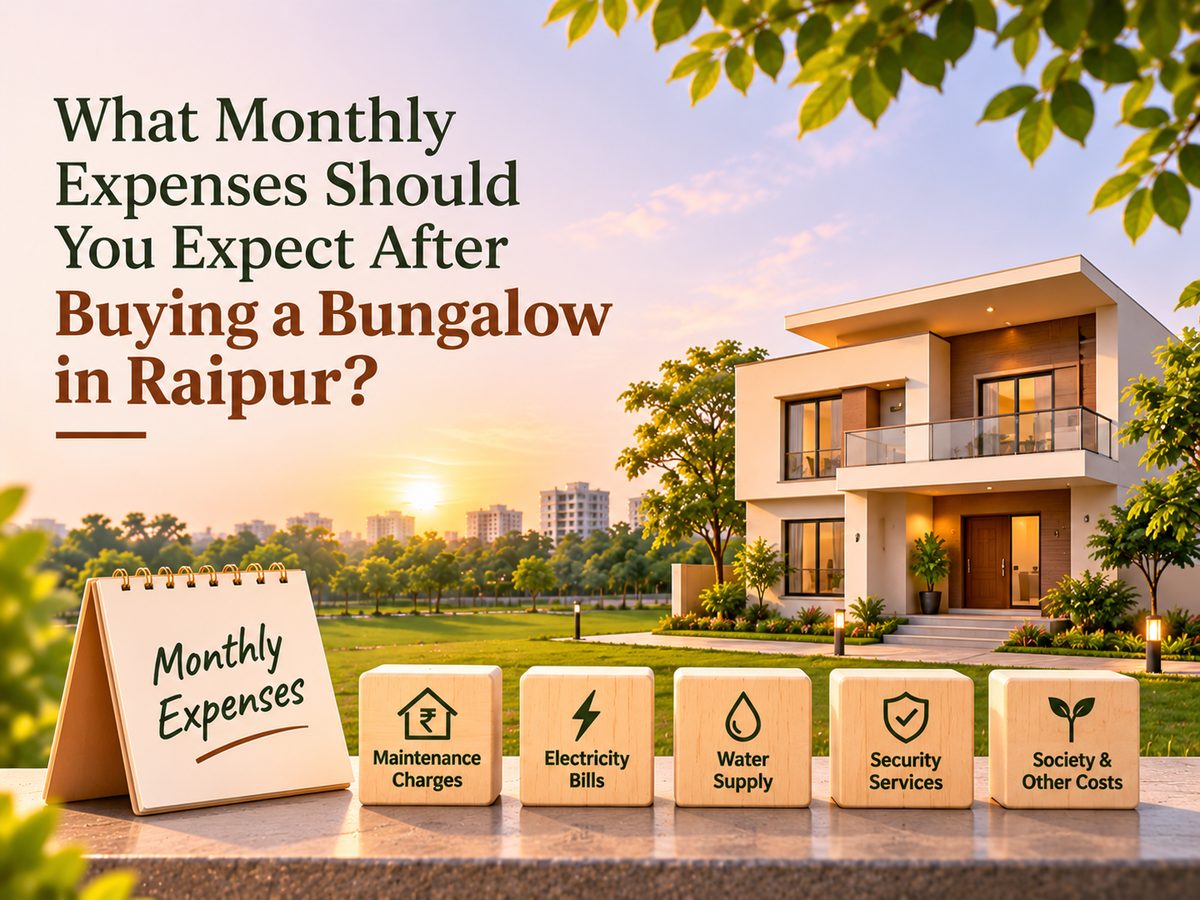
What Monthly Expenses Should You Expect After Buying a Bungalow in Raipur?
Buying a bungalow is an exciting milestone for any family. Having your own residential space, enjoying greater privacy, and creating a home according to your preferences are some of the reasons people consider independent bungalow living.
However, there is one important question that buyers often overlook while planning their purchase: How much will it cost to maintain the bungalow every month?
The purchase price is only the beginning of homeownership. Once you move in, you will have regular expenses such as electricity bills, water charges, property taxes, maintenance, security, repairs, and household services. Depending on the size of your property, family requirements, and the facilities available, these expenses can vary considerably.
If you are planning to purchase a bungalow in Raipur, understanding these costs beforehand can help you prepare a realistic monthly budget. It can also help you decide whether a particular property is financially comfortable for your family in the long run.
Let's look at the expenses you should consider before buying a bungalow.
1. Monthly Maintenance Charges
Maintenance is one of the first expenses you should understand when purchasing a bungalow, especially if it is located within a planned residential community.
If you own an independent bungalow outside a managed community, you may need to arrange and pay for maintenance activities yourself. These can include cleaning common access areas, maintaining the exterior, managing drainage, and looking after any garden or outdoor space.
If the bungalow is part of a residential campus, there may be a monthly or periodic maintenance charge for shared facilities and common infrastructure.
Depending on the project, maintenance may cover:
Cleaning and upkeep of common areas.
Internal road maintenance.
Garden and landscaped area maintenance.
Common electricity expenses.
Security arrangements.
Maintenance of shared recreational facilities.
Waste management and common infrastructure.
Before purchasing, ask the developer or management team for a written breakdown of maintenance charges. Understand whether the charges are monthly, quarterly, or annual.
Also clarify which services are included and which expenses you will need to pay separately.
The maintenance cost should be considered part of your regular household budget rather than an unexpected expense after possession.
2. Electricity Bills and Power Consumption
Electricity is another regular expense that can vary depending on your family's lifestyle and the size of the bungalow.
In Raipur, summers can be particularly demanding when it comes to cooling requirements. Air conditioners, coolers, refrigerators, water pumps, televisions, and other appliances can contribute significantly to monthly electricity consumption.
A larger bungalow may also have more lighting points, additional appliances, and outdoor lighting requirements.
Your electricity bill will depend on factors such as:
Number of air conditioners and their usage.
Family size and daily electricity consumption.
Type and efficiency of electrical appliances.
Water pump usage.
Indoor and outdoor lighting.
Seasonal temperature conditions.
For example, a family using multiple air conditioners throughout the summer will generally have higher electricity expenses than a household that uses cooling appliances occasionally.
If you are purchasing a completed bungalow, ask whether energy-efficient fittings and appliances are installed. Check the electrical specifications and understand the property's electricity connection arrangements.
You should also distinguish between your individual electricity consumption and any common electricity charges collected through residential community maintenance.
3. Water Supply and Related Expenses
Water is essential for everyday household activities, including cooking, cleaning, bathing, gardening, and washing clothes.
Before purchasing a bungalow, understand how the property receives its water supply and whether any additional charges apply.
Some residential developments may have internal water supply arrangements, while others may depend on individual connections or other approved sources.
Ask the following questions:
What is the source of the water supply?
Is water supplied regularly?
Are there separate water charges?
Are pumping and maintenance expenses included in common maintenance?
Is there a rainwater harvesting system?
Are there arrangements for managing wastewater?
Your actual water expenses will depend on family size, consumption, supply arrangements, and applicable charges.
If your bungalow has a garden or outdoor space, remember to account for additional water usage.
It is better to understand these arrangements before booking rather than discovering additional costs after moving in.
4. Property Tax and Other Government Charges
Property tax is an important ownership expense that buyers should include in their annual financial planning.
The applicable property tax depends on the local authority's rules and factors such as property location, size, usage, and other assessment criteria.
Although property tax may not be paid every month, it is useful to divide the expected annual amount into twelve parts and include it in your monthly budget.
For example, if your annual property tax is ₹12,000, you can set aside approximately ₹1,000 every month.
You should also check whether any other local charges or applicable government payments are associated with the property.
Before purchasing, ask the seller or developer about the existing tax status and whether any outstanding dues need to be cleared.
Keep copies of payment receipts and property-related documents for future reference.
5. Security and Residential Community Expenses
Security is an important consideration for families purchasing independent bungalows.
If your property is located within a managed residential community, there may be arrangements such as gated entry, security personnel, CCTV surveillance, and boundary walls.
These facilities may be funded through common maintenance charges or separate security contributions.
Before purchasing, understand how security is managed and whether the arrangements are operational.
Ask whether security personnel are available around the clock, how visitor entry is managed, and who is responsible for maintaining surveillance systems.
If you are buying an independent bungalow outside a managed community, you may need to arrange your own security systems, CCTV cameras, alarms, or other safety measures.
These expenses may not be recurring every month, but they should be included in your overall homeownership budget.
A secure residential environment can add convenience, but buyers should always check the actual arrangements rather than assuming that every advertised facility is included.
6. Gardening and Outdoor Space Maintenance
One advantage of bungalow living is the possibility of having outdoor space. Depending on the property design, you may have a small garden, landscaped entrance, terrace, or other open areas.
However, these spaces require regular attention.
If you maintain a garden, your expenses may include:
Gardening services.
Plants and gardening supplies.
Fertilisers and soil treatment.
Watering arrangements.
Lawn maintenance.
Seasonal cleaning.
The cost will depend on the size of the garden and whether you maintain it yourself or hire someone.
If you prefer a low-maintenance outdoor space, consider simple landscaping and plants that require less frequent care.
During a site visit, understand whether the property includes private outdoor areas or shared landscaped spaces. The maintenance responsibilities can be different in each case.
7. Plumbing, Electrical Repairs and General Maintenance
Even a well-constructed bungalow requires regular maintenance over time.
Small problems such as leaking taps, blocked drains, faulty switches, damaged fittings, and minor electrical issues can occur during everyday use.
These may not require significant spending individually, but ignoring them can lead to larger repair expenses later.
Homeowners should keep a separate maintenance reserve for:
Plumbing repairs.
Electrical maintenance.
Bathroom fittings.
Door and window repairs.
Waterproofing.
Painting and surface repairs.
Roof and drainage maintenance, where applicable.
The frequency and cost of these repairs depend on construction quality, materials, property age, and usage.
A practical approach is to set aside a fixed amount every month rather than waiting until a repair becomes urgent.
If you are buying a newly constructed bungalow, check the applicable defect liability or warranty terms and understand how to report construction-related issues.
8. Cleaning and Domestic Help
Cleaning a bungalow can involve more work than maintaining a smaller apartment, particularly if the property has multiple bedrooms, bathrooms, balconies, or outdoor areas.
Depending on your family's routine, you may hire domestic help for daily cleaning, cooking, gardening, or other household activities.
These expenses are personal and can vary according to the number of hours required, the services arranged, and local rates.
For example, a family that manages daily cleaning independently may have lower recurring expenses than a household employing multiple domestic workers.
When planning your monthly budget, include the services you realistically expect to use.
Also consider whether the property's layout makes cleaning convenient. A practical floor plan can make everyday maintenance easier.
9. Internet, DTH and Other Household Services
Modern households depend on several services beyond electricity and water.
These may include broadband internet, television subscriptions, mobile connections, home security subscriptions, and other digital services.
If multiple family members work or study from home, reliable internet connectivity may be an important requirement.
Before purchasing a bungalow, check which internet service providers operate in the area and whether fibre broadband or other suitable connections are available.
You should also account for annual subscription renewals and equipment-related expenses.
While these costs may seem small individually, together they form part of your regular household spending.
10. Keep a Reserve for Unexpected Expenses
One of the most important financial habits for bungalow owners is maintaining an emergency reserve.
Unexpected expenses can arise even when a property is relatively new. A plumbing issue, appliance replacement, electrical fault, water leakage, or other repair may require immediate attention.
If your entire monthly budget is already committed to loan repayments and household expenses, these situations can create unnecessary financial pressure.
Ideally, maintain two separate reserves:
Household emergency fund: For medical emergencies, income disruptions, and other personal financial needs.
Home maintenance fund: For repairs, replacements, and property-related expenses.
The amount you set aside will depend on your income, property size, and financial commitments.
You should also consider home insurance and understand what types of risks and damages are covered by the policy.
Planning for unexpected expenses can make long-term bungalow ownership more manageable.
How to Prepare a Monthly Bungalow Budget
Before purchasing a bungalow, prepare a simple monthly expense estimate.
Here is an illustrative budgeting format:
These figures are only examples to demonstrate how you can organise your budget. Actual costs may be considerably different depending on the bungalow, location, family size, service arrangements, electricity consumption, and applicable charges.
Your home loan EMI, groceries, domestic help, insurance, and other personal household expenses should be calculated separately.
The best approach is to collect actual quotations and applicable charges for the property you are considering before finalising your budget.
Conclusion: Choose a Bungalow That Fits Your Lifestyle and Budget
Buying a bungalow is not just about arranging the purchase amount. It is also about understanding the recurring expenses and responsibilities that come with owning a home.
From maintenance and electricity to security, repairs, and property tax, every expense should be considered before making a final decision. A realistic monthly budget can help you enjoy your home without putting unnecessary pressure on your finances.
For buyers exploring bungalows in Raipur, Silver Oak Raipur offers residential bungalow options within its developed residential campus at Dhansuli, near Vidhan Sabha Road. The project also features residential plots and community facilities, including landscaped spaces and recreational amenities.
If you are considering purchasing a bungalow here, visit the campus and ask the project team for details about current pricing, available property options, maintenance charges, security arrangements, and the facilities included. Review the applicable documents and understand the recurring costs before making your decision.
A good home should not only fit your purchase budget but also remain comfortable and affordable to maintain in the years ahead.